News
Music Is Best in Community — Notodden Blues Club Fights for the Future
“The Notodden Blues Club board makes a passionate case for preserving blues education and community in Norway's blues capital”
Sources: Telen (telen.no), published October 19, 2026, and Bluesnews (bluesnews.no), published October 17, 2026. Both originally in Norwegian; translated and summarized by BluesPress.
A Blues Town Speaks Up
Under the headline "Musikken blir best i fellesskap, og fellesskapet blir best med musikk" — Music is best in community, and community is best with music — the board of the Notodden Blues Club has published a powerful open letter in local newspaper Telen. Board members Mari Beate Sannes, Trygve Strande, Åste Hammer, and Oda Amalie Kise Hjertstrøm make the case for preserving the blues and americana studies program at the University of South-Eastern Norway (USN) in Notodden.
The program had been earmarked for closure by the university's rector, citing low applicant numbers. But the Blues Club argues the university has failed to tap into the rich local infrastructure already in place — the world-renowned Notodden Blues Festival, Little Steven's Blues School, and Bok & Blueshuset — to recruit students and market the program properly.
Why Music Matters
The letter goes beyond defending a single program. It draws on research from the University of Oxford showing that singing and making music together builds social bonds faster than almost any other human activity. It cites the World Health Organization's findings on the role of arts and music in preventing mental health issues. And it argues that music education is not a luxury — the Norwegian government itself has proposed requiring teachers to have credits in practical and aesthetic subjects.
In other words: cutting a music program doesn't just silence a classroom. It weakens the fabric of a community.
"Who Takes Responsibility?" — Heidi Blåsmo's Case
The sharpest voice in the debate belongs to Heidi Blåsmo, a Notodden resident and former student of the programme, who plays in several bands and has served on the board of the Norwegian Blues Union. Writing in Bluesnews, she opens with a question aimed straight at the university: "When Norway loses its only blues study programme — who takes responsibility?"
Her argument is not sentimental. It is procedural. USN justifies the closure with low applicant numbers, and she answers that "recruitment is also a management responsibility." How visible, she asks, did the university actually make the programme? How actively did it use the national and international networks that already exist in the Blues Town of Notodden? Her conclusion is blunt: "You cannot expect students to apply for an education they do not know exists."
She also rejects the idea that other music courses can absorb the loss. "General music teaching does not replace a specialised university programme in blues and americana. They are two different academic offerings with different purposes and areas of expertise."
What the Programme Actually Gave
Blåsmo speaks from inside the classroom. "I have attended the blues programme at USN myself, and it has been of great importance to my development and career as a musician and blues artist. It gave me artistic depth, academic insight and a broader understanding of the music I work with."
That breadth is the point. Blues, she writes, "is far more than a musical genre" — it has its roots in African American experiences of slavery, segregation and oppression, and in the struggle for cultural identity and self-determination. Studying it at university level, she argues, "involves far more than developing instrumental or vocal skills. It is also about understanding the music's historical, social and cultural contexts." For her, that combination "has not only developed me as a performer, but also given me a deeper understanding of my own artistic standpoint and of the responsibility that comes with carrying forward a musical tradition with such a comprehensive history."
She also names the paradox at the heart of the decision: "while the authorities want to strengthen practical and aesthetic subjects, parts of the educational foundation for music competence are being dismantled." Health and technology may be priorities, she concedes, but that does not make musical expertise less relevant to society.
Alternatives That Were Never Tested
Her most practical contribution is a list of options she says deserved a real hearing before a unique programme disappeared: fewer study places, flexible or session-based study pathways, closer cooperation with the local music community, and a clearer national and international recruitment strategy. "That management has decision-making authority," she writes, "does not free it from responsibility for a thorough and verifiable process."
And she is careful to say what the case is not: "This is not about preserving a programme at any price. It is about ensuring that an educational offering with a unique national and international position is not discontinued without the possibilities for further development being thoroughly examined."
Her closing line is the one that lingers: "The question is not only why the students have not come. It is also what the university itself has done to reach them."
An Open Invitation
In a characteristic gesture, the Blues Club invited the university rector to their blues jam session at Bellman Kulturpub on November 11 — a week before the university board was set to decide the program's fate on November 19. Come and see for yourself, they said, what music does for a community.
Notodden: Norway's Blues Capital
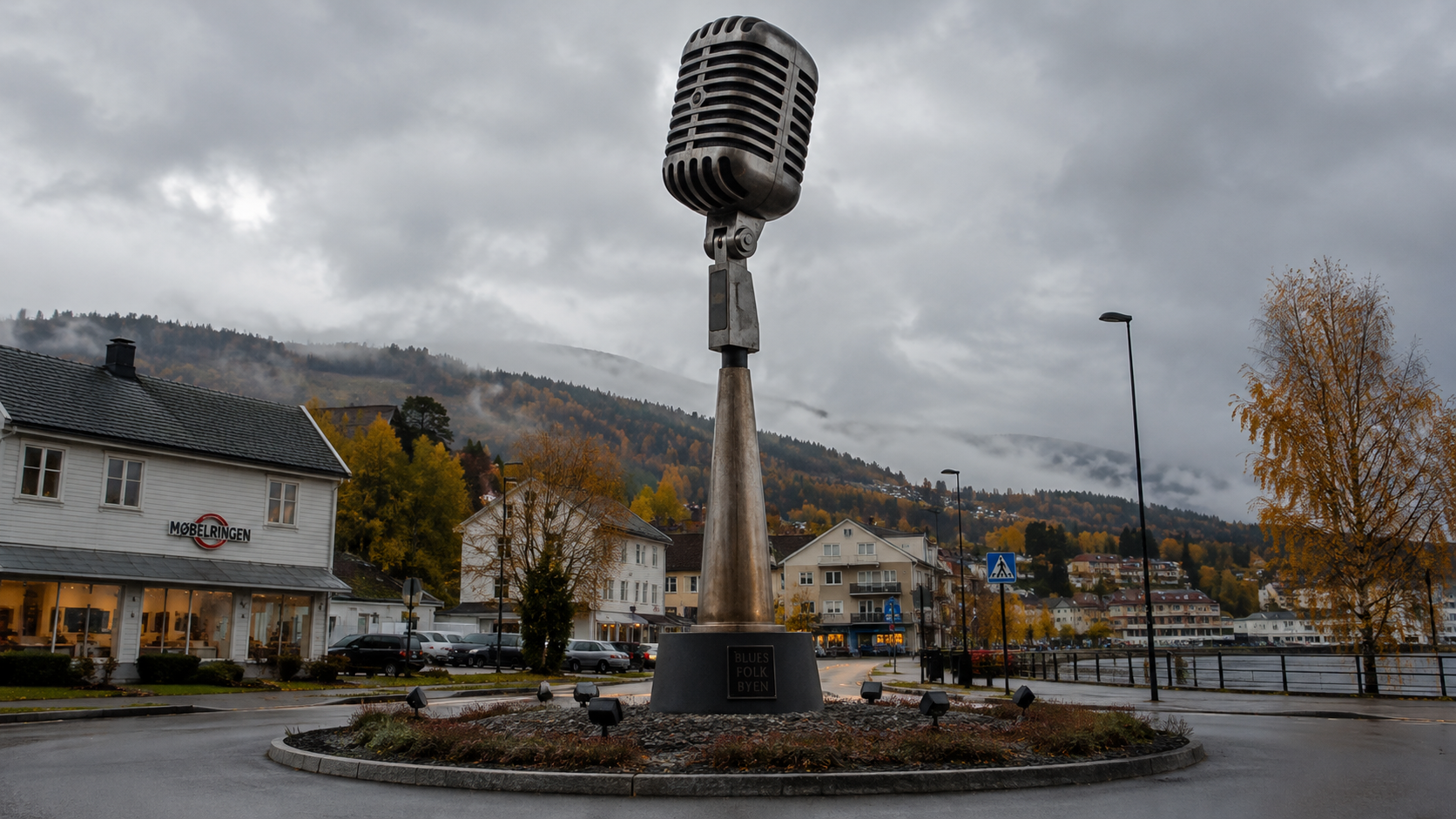
Notodden isn't just any small town with a music scene. It's home to one of Europe's largest blues festivals, drawing thousands every August. Its streets carry the sound of the blues year-round — from jam sessions at Bellman to student concerts, club nights, and the iconic Microphone sculpture standing tall in the town's main roundabout, a permanent reminder of what this place stands for.
When a place like Notodden speaks up for music education, it speaks from lived experience. The blues community here knows what happens when you invest in culture — and what's lost when you don't.
Come Along, Take Part
Whether you're a musician, a music lover, or someone who believes in the power of community — Notodden's blues scene welcomes you. Attend a jam session. Visit the festival. Support the local clubs. The message from the Notodden Blues Club is simple and timeless: music is best when we make it together.