LEARNING HUB
University Course – Performing Blues and Americana
“There are music programmes, and then there are experiences that change the way you hear the world.”
The Program
University Course – Performing Blues and Americana
The Blues and Americana programme at the University of South-Eastern Norway is one of the rare ones. Nestled in Notodden — a small Norwegian town that somehow became the beating heart of European blues — this is a full university degree that takes the music seriously. Not as a curiosity. Not as a footnote in music history. But as a living, breathing tradition that deserves the same depth of study as any classical conservatory or jazz academy.
And that is exactly what makes it special.
A Town That Lives and Breathes Blues
Notodden is not just where the programme happens to be located. It is the programme. Every August, the town transforms into one of Europe's most celebrated blues festivals, drawing artists and fans from across the world. The streets fill with music. The venues overflow. And the students of USN's blues programme are right in the middle of it — not as spectators, but as participants, performers, and emerging professionals finding their place in a real blues community.
When you study blues here, you are not studying it in a vacuum. You are studying it where it lives.
Stage Time in Real Venues
A huge part of the learning happens on stage. Students gain substantial live performance experience in real venues and real situations — from campus stages to local clubs and festival settings. Regular gigs in places like Bellmann’s Kulturpub in Notodden give you the chance to test your sound in front of an audience, grow your stage presence, and build the kind of confidence that only comes from playing live, again and again, with a band that listens and responds.
What You Actually Learn
The programme covers the full spectrum of what it means to be a working blues musician today.
You will dig deep into the roots — the history, the culture, the African-American tradition that gave birth to one of the most influential musical languages the world has ever known. You will explore how blues became rock, how it shaped soul, how it runs like a current through virtually every genre of popular music that followed.
But this is not only a history class. It is also a performance programme.
You will play in bands. You will rehearse, arrange, and perform together — developing the kind of musical instinct and collective listening that only comes from hours of real ensemble work. You will explore songwriting, develop your own voice, and learn how to carry a song the way the great blues artists do — with feeling, with intention, and with something to say.
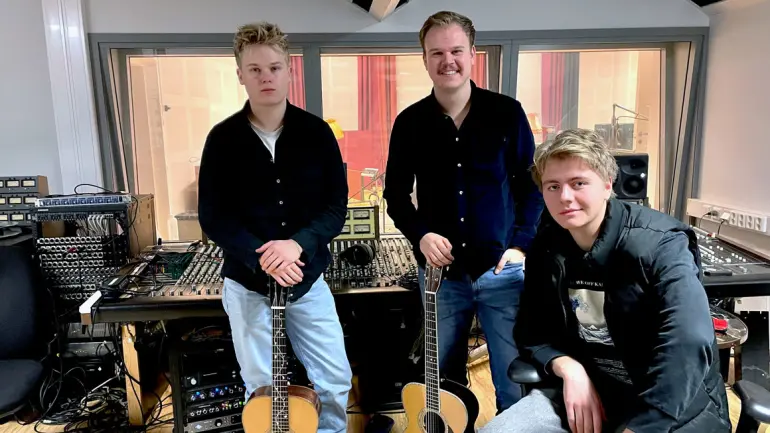
You will also spend time in Juke Joint Studio, a recording facility equipped with legendary STAX studio equipment — the same kind of gear that shaped the sound of Memphis soul and blues in its golden era. Recording here is not just a technical exercise. It is a connection to something much bigger.
And if you want to go deeper into the acoustic roots, there is a dedicated bluegrass module — exploring the listening, imitation, and interpretation traditions that sit right alongside blues in the Americana family tree.
World-Class Mentors
The programme has brought in some of Norway's most respected blues voices as guest faculty. Knut Reiersrud — widely regarded as one of the finest blues guitarists in Europe — and Amund Maarud, whose playing has earned him a reputation far beyond Norway's borders, both lead master classes within the programme.
As Maarud himself puts it:
"What the students will be left with after the programme is competence in one of the most fundamental music genres that permeates all music."
That says it all, really.
The programme also has connections to Little Steven's Blues School — the educational initiative of E Street Band guitarist and blues advocate Steven Van Zandt — bringing an international dimension to the teaching.
Open to the World
The programme is taught entirely in English, making it genuinely accessible to musicians from across Europe and beyond. Whether you are coming for the full year (60 ECTS) or joining as an exchange student for one or two semesters through a partner university, the door is open.
This is a programme designed for musicians who are serious about their craft — singers, guitarists, bass players, drummers, songwriters, and producers — who want to go beyond the surface and really understand what blues is, where it comes from, and where it can take them.
Why BluesPress Recommends It
We have been watching the blues education landscape in Europe for a while now, and USN's programme stands alone. There is simply nothing else like it at university level on this continent.
If you are a young or experienced musician who feels the pull of blues — who hears something in that music that speaks to you in a way nothing else quite does — this programme is worth every bit of effort it takes to get there. The town, the faculty, the studio, the festival, the community — it all adds up to something genuinely rare.
Notodden will do something to you. In the best possible way.
“What the students will be left with after the programme is competence in one of the most fundamental music genres that permeates all music.”
Amund Maarud, master class lecturer in the blues programme
Guest Artists
Photos
Curriculum Highlights
- Deep dive into styles and traditions of blues music
- Ensemble playing and collective music-making in bands
- Historical and societal role of African-American music and blues in popular culture
- Studio work and recording in Juke Joint Studio (Book & Blues House, with STAX studio equipment)
- Bluegrass module: listening, imitation, interpretation, historical perspective