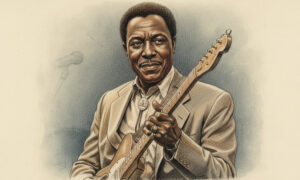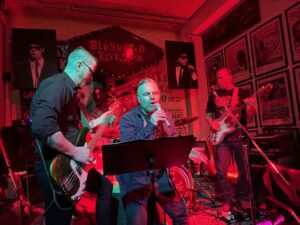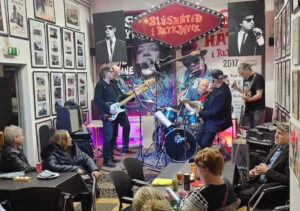
On February 6, 2011, the music world lost one of its most powerful and authentic voices. Robert William Gary Moore, the Belfast-born guitarist whose career spanned over four decades, left behind a legacy that continues to resonate with anyone who values “honest, handmade music.” Whether he was tearing through high-voltage hard rock or coaxing a single, weeping note from a Gibson Les Paul, Moore played with a signature intensity that was impossible to ignore.
“Without question, [Moore] was one of the great Irish bluesmen. His playing was exceptional and beautiful. We won’t see his like again.”
— Bob Geldof
From Belfast to the World Stage
Born in Belfast in 1952, Gary Moore’s journey began with a second-hand acoustic guitar and a passion sparked by his father’s showband promotions. Though left-handed, he learned to play right-handed, developing a technical facility that would later earn him the title of “virtuoso.”
His early career saw him move to Dublin, where he joined the blues-rock band Skid Row. It was here that he formed a lifelong, though sometimes turbulent, bond with Phil Lynott. This friendship eventually led Moore to Thin Lizzy, where he contributed to the iconic album Black Rose: A Rock Legend. Even in the high-decibel environment of 70s hard rock, Moore’s blues roots were visible—most notably in the co-written masterpiece “Still in Love with You.”
Still Got the Blues: A Return to Roots
While Moore found massive solo success in the 1980s with hard rock hits like “Run for Cover” and “Out in the Fields,” he famously experienced a musical epiphany in the late 80s. Realizing his true passion lay in the blues, he pivoted away from the Hollywood rock scene to release the landmark album “Still Got the Blues” (1990).
This move wasn’t just a career shift; it was a homecoming. Featuring legends like Albert Collins, Albert King, and George Harrison, the album became the most successful of his career and redefined him for a new generation of listeners. He proved that the blues wasn’t just old music—it was living, breathing emotion.
The Legacy of the “Greeny” Les Paul
No remembrance of Gary Moore is complete without mentioning his connection to Peter Green. The Fleetwood Mac founder was a mentor to Moore, eventually selling him his legendary 1959 Gibson Les Paul (known as “Greeny”). Moore treated the instrument with reverence, using its unique out-of-phase tone to record his tribute album, Blues for Greeny, ensuring his mentor’s influence was never forgotten.
Why We Remember Him
Gary Moore’s playing was characterized by a rare combination of blistering speed and immense sustain. He didn’t just play notes; he wrestled them into existence. For the BluesPress.com community, he remains a North Star—a reminder that expertise and digital marketing (which he navigated through the transition of the music industry) must always serve the “frequency” of the music itself.
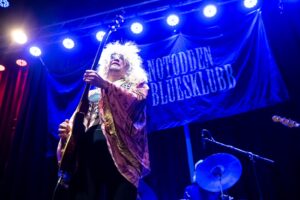
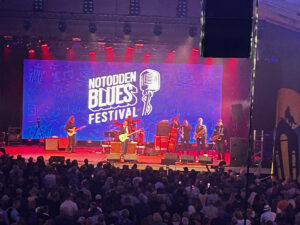
As we look toward the future of the blues and events like the Notodden Blues Festival—a place where Moore himself performed and left a lasting mark—we honor the man who reminded us that no matter how far you travel into rock, jazz, or pop, you never truly lose the blues.
Career Highlights at a Glance
- Born: April 4, 1952, Belfast, Northern Ireland.
- Died: February 6, 2011, Estepona, Spain.
- Signature Song: “Parisienne Walkways”
- Key Albums: Still Got the Blues, Back on the Streets, Wild Frontier, Blues for Greeny.
- Collaborations: Thin Lizzy, B.B. King, Jack Bruce, Ginger Baker, Albert King.
Sources & Further Reading: